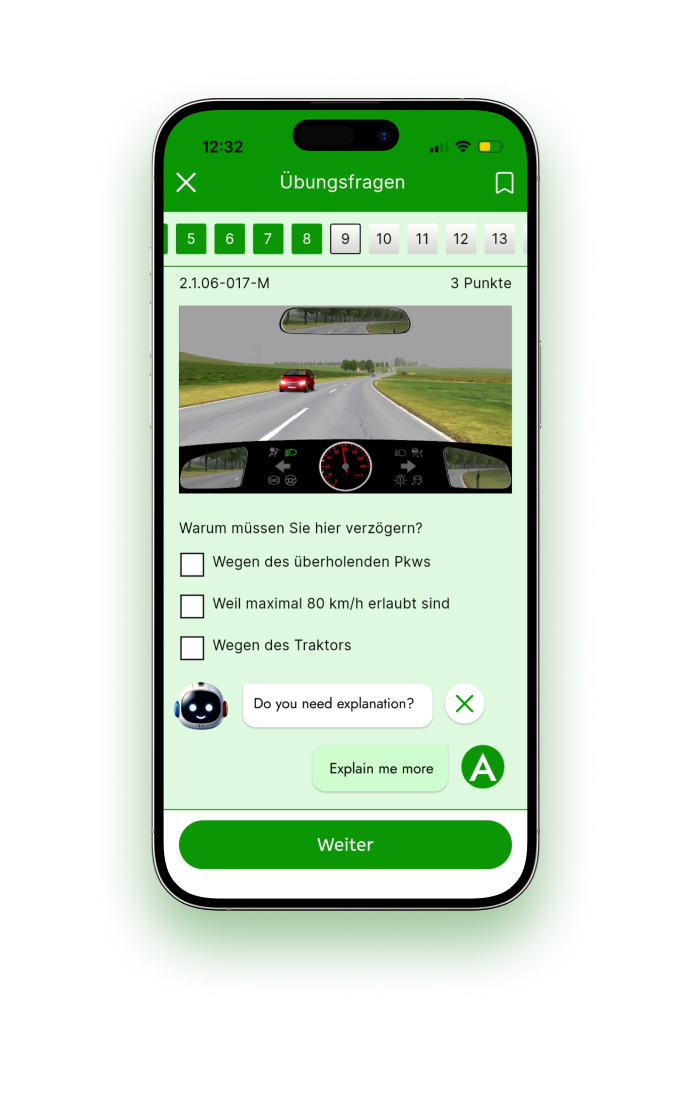
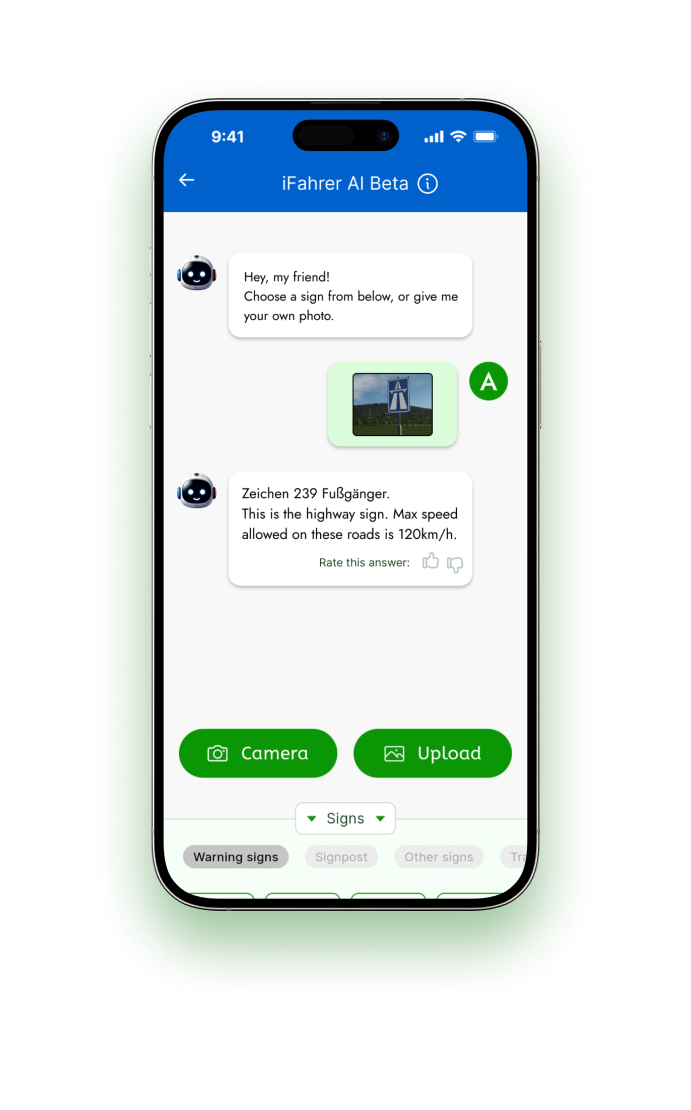
Get ready for your license test with AI assistance!
What is the correct course of action in this situation?
I perform an emergency braking manoeuvre
I continue driving, ready to brake
I accelerate
Here is Our AI Assistant's Explanation
Emergency braking is the correct action when there is an immediate danger that you cannot safely avoid in any other way, for example when you suddenly come upon a stationary queue and your current speed and distance are not enough to stop with normal braking. In German driving theory, the priority is always “avoid a collision,” even if hard braking is uncomfortable for you or surprising for traffic behind.
In this kind of situation the key rule of thumb is: if you see stopped traffic ahead, you must reduce speed early so that you can always stop in time within the distance you can see is clear. If you misjudge it and notice too late that the vehicles ahead are already standing, then strong braking (up to emergency braking) is required to prevent rear-ending them.
Why the other actions are wrong: continuing “ready to brake” is only acceptable when the situation is still developing and you still have enough space to stop with normal braking. Once there is a clear, close obstacle (a stationary queue), you must brake immediately, not just “be ready.” Accelerating is never appropriate when you are approaching a visible hazard or a red light/standing traffic, because it reduces your stopping margin and increases crash severity.
For similar questions, ask yourself: Is there an immediate collision risk if I keep rolling? If yes, brake decisively (up to emergency braking). If no, then controlled early braking and increased following distance are the correct strategy.